
Do I need a permit for a porta potty in San Bernardino?
If the unit sits on your own lot, on a driveway or inside a fenced job site, San Bernardino Porta Pros has not found a permit requirement tied to that placement. That covers most home renovation jobs and standard construction site setups. The gray area is the curb, the sidewalk or any part of a street. That placement in the public right of way needs confirming with the city before delivery, because we have not verified a specific city rule for it and won't guess at one. Ask before you assume, the same way you would confirm a temporary power pole permit before running a line across a sidewalk, or the way a delaware porta potty rental crew would check local rules before setting a unit on a public curb. If you're planning a large event with multiple standard units or an ADA accessible unit, loop in the venue too, since some private lots have their own placement rules layered on top of city ones. We build that check into every porta potty rental we quote, so you're not the one making calls to city departments mid-week before an event. General porta potty rules and regulations vary enough by city that a rule from a jersey city dumpster permit process, or a roll-off dumpster rental delaware crew relies on, won't tell you anything reliable about San Bernardino.
Do you need a permit for a dumpster on the street?
Same logic as the toilets: a roll-off dumpster parked in your driveway is usually fine, but placement in the street or right of way is the part that needs a call to the city first. We have not verified San Bernardino's specific dumpster permit process, so we won't quote a fee or a code number here that we can't confirm. What we do know from the job site: a roll-off delivery needs about 60 feet of straight clearance behind the truck, so plan your 10 yard, 20 yard, or 30 yard dumpster rental spot with that in mind regardless of permit status. Curbside placement almost always triggers a permit question in any city, San Bernardino included, so check our dumpster permit requirements page before you commit to a street spot. If your load includes debris the city restricts, check what cannot go in a dumpster too, since that's a separate issue from placement and just as easy to get wrong.
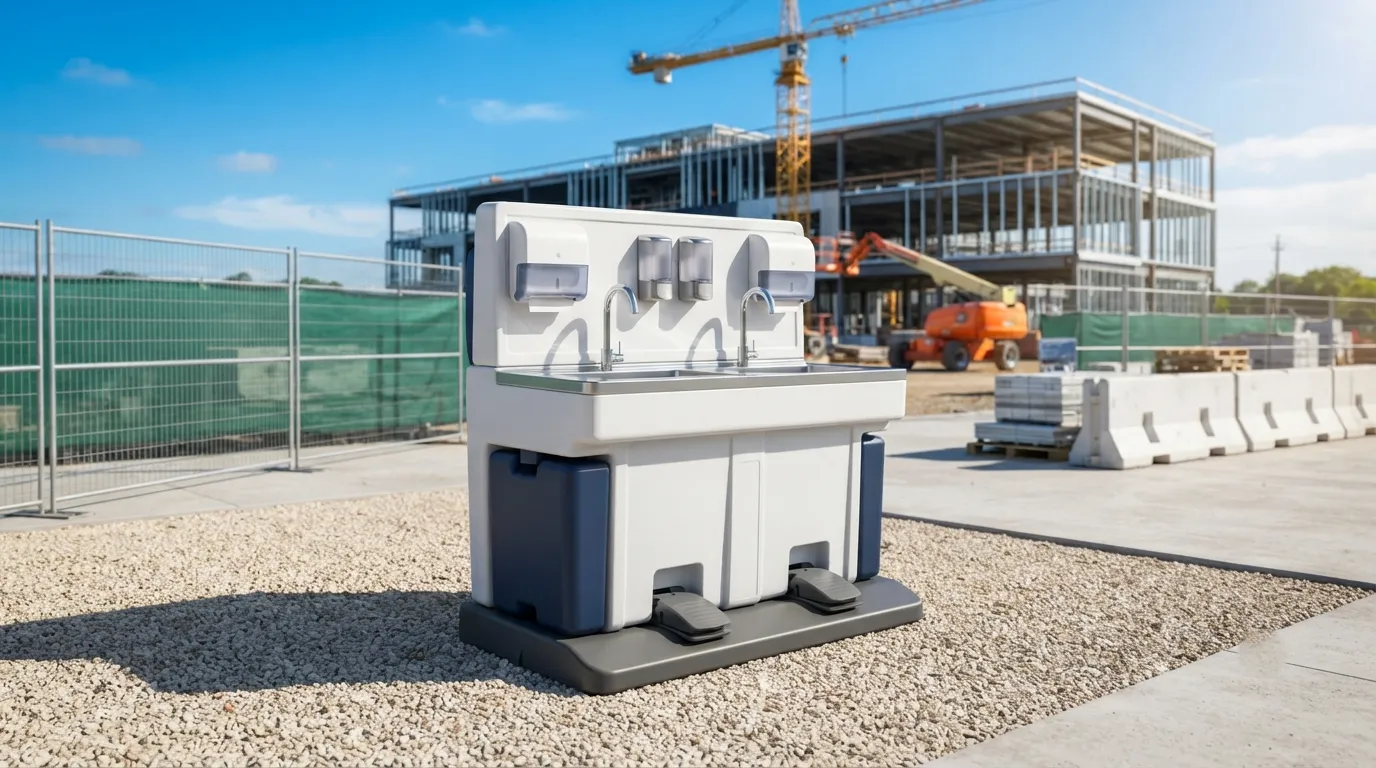
What are the porta potty placement rules for job sites?
Placement rules on active job sites come from OSHA more than city code. OSHA 1926.51(c)(1) sets the ratio: one toilet for 20 workers or fewer, then one toilet seat and one urinal per 40 workers once you pass 20, scaling to one per 50 workers at 200 or more. That's the number that actually drives unit count on a construction dumpster rental job in San Bernardino, not a city ordinance. Beyond the count, think about the ground: ADA Standards section 302.1 calls for stable, firm, slip resistant surfaces, and a standard unit runs about 44 by 48 inches on the ground and 92 inches tall, so it needs a level pad clear of soft dirt. If you're clustering multiple single-user units, ADA Standards section 213.2 requires at least 5 percent of them to be accessible, never fewer than one. Our porta potty placement guide covers clearance and access in more detail, and OSHA portable toilet requirements breaks the ratio down further for larger crews.
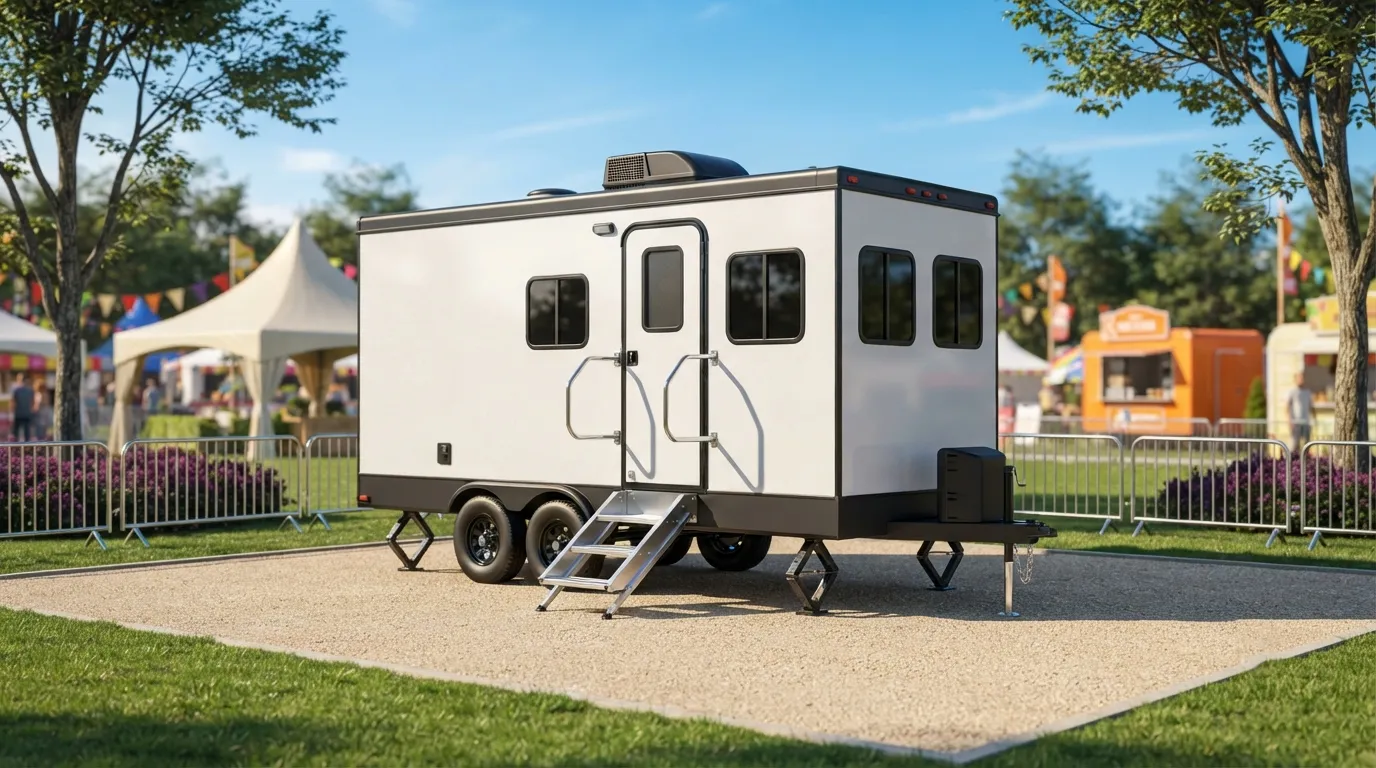
When does a portable restroom rental need a permit versus not?
The line is almost always about location, not the rental itself. Private property, no permit expected. Street, sidewalk, or public right of way, confirm with the city first. Events on public parkland or in a closed street usually need a separate event permit from the venue or the city, which is a different process than a simple event restroom rental for a backyard wedding. A festival restroom or marathon restroom setup on a public route almost certainly triggers a review, while a wedding restroom rental on private grounds typically doesn't. For temporary fence rental or crowd control barrier placement near your units, the same public versus private distinction applies. When in doubt, tell San Bernardino Porta Pros the exact address and we'll flag if it looks like a right of way question before you get a truck stuck at the curb.
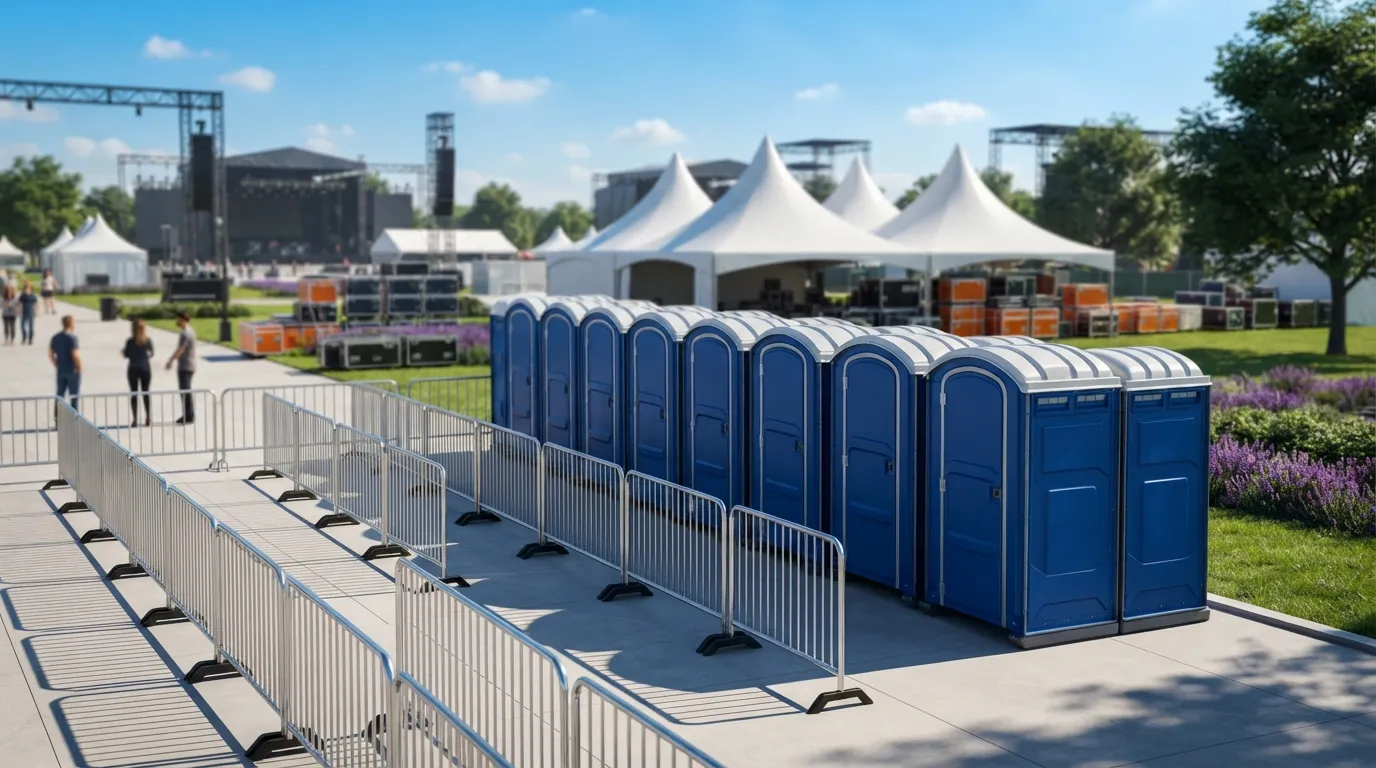
Pricing context while you sort out placement
| unit | day | week | month |
|---|---|---|---|
| standard | $100-$350 | $130-$500 | $125-$325 |
| ada | $200-$400 | $240-$500 | n/a |
| deluxe | $85-$1200 | $150-$290 | n/a |
Delivery fees run $100 to $500 for a single day and $50 to $150 for a week, separate from unit cost. See porta potty rental cost and monthly porta potty rental for more detail on what drives those ranges.
Does a residential backyard rental need a permit?
Usually not. A unit placed on your own property, off the street, typically needs no permit. The exception is if your HOA or venue has its own rule, which is separate from any city requirement. Confirm placement details on our porta john rental page.
Can I place a porta potty on the sidewalk temporarily?
That's public right of way, and it needs city confirmation first. We have not verified San Bernardino's exact sidewalk rule, so ask before delivery. Keep at least a 36 inch clear path per ADA Standards section 403.5.1 if pedestrians need to pass.
What happens if I skip a required permit?
We don't know San Bernardino's specific penalty, so we won't guess a fee. The safer move is asking the city before delivery day, which San Bernardino Porta Pros can help coordinate.
Do event rentals need a different permit than construction ones?
Often yes. Events on public land or closed streets usually go through a separate city or parks process, while a private construction site rental typically doesn't. Check with the venue and the city both before booking.
How far in advance should I check permit rules?
Check as soon as you pick a location, ideally two to three weeks out for street or public placements. That gives time for city review and still leaves room to adjust your portable restroom rental order if the spot changes.
Next step
Get a delivery date
Tell us the address, the dates and the headcount. We size the order and confirm the route.