
How many units do I actually need?
Start with bodies on site, not square footage. OSHA 1926.51(c)(1) sets the construction ratio: one toilet for 20 workers or fewer, then one toilet seat and one urinal per 40 workers once you pass 20, dropping to one seat and one urinal per 50 workers at 200 or more. Farms and hand-labor crews fall under a different rule, OSHA 1928.110, which calls for one facility per 20 employees within a quarter mile walk, a common setup for farm and agricultural restrooms around San Bernardino. Events run on a different math entirely, closer to units per hundred guests over the show length. If you are still guessing, our sizing guide walks through it, and the OSHA requirements page breaks the ratio down further. Once you have a number, decide between a standard unit, a deluxe flushable model, or an ADA accessible unit for at least one spot in the lineup.
What size unit fits my job site?
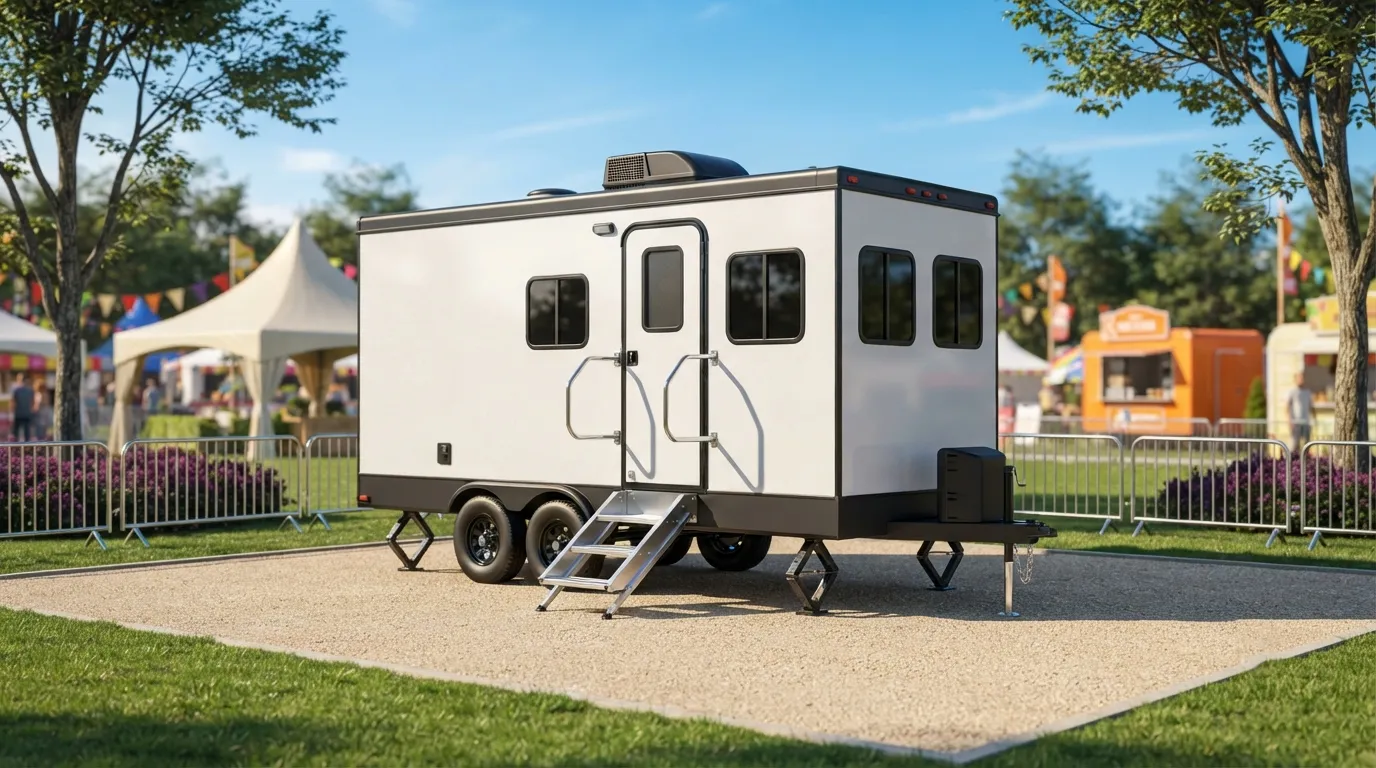
A standard portable toilet runs about 44 by 48 inches on the ground and stands roughly 92 inches tall, with a 60 to 70 gallon holding tank underneath the seat. That footprint matters on tight lots in San Bernardino where you are squeezing a unit between a fence line and a dumpster. If you are also renting a roll-off dumpster, remember the truck needs about 60 feet of straight clearance behind it to drop or pull the box, so plan porta potty placement around that lane, not on top of it. Storage on site? A 20ft storage container or 40ft container needs its own clear pad too. For crews wanting something closer to a real bathroom, a restroom trailer or a 2 stall trailer solves the space problem differently, trading footprint for height and hookup needs.
Where should the unit go on site?
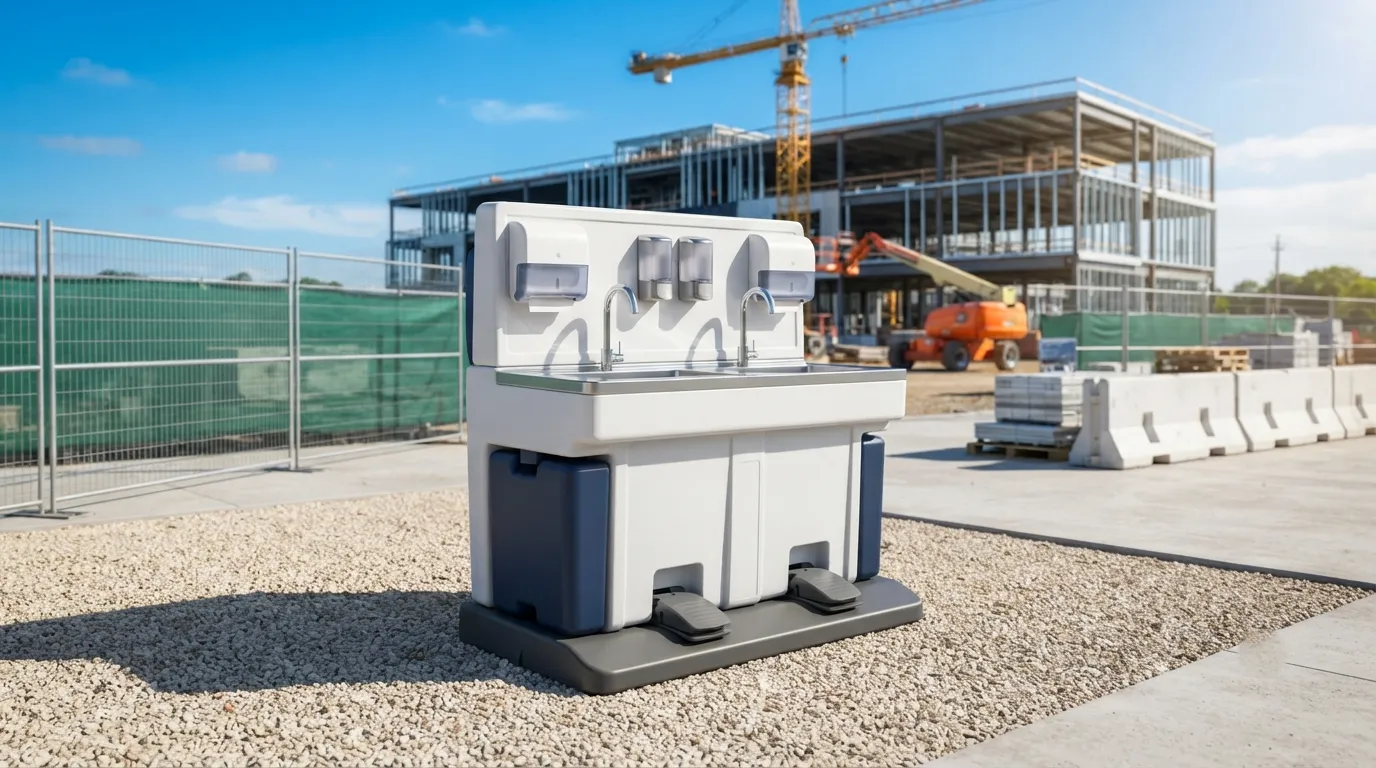
Firm, level ground within reach of the service truck, away from soft dirt or standing water. ADA Standards section 302.1 requires floor and ground surfaces to be stable, firm and slip resistant, which applies directly to the pad you pick for an accessible unit. If you are clustering multiple single-user toilets, ADA Standards section 213.2 requires at least 5 percent of them to be accessible, and never fewer than one. Check clearances too: ADA Standards section 403.5.1 calls for a 36 inch clear route to the unit, and section 404.2.3 sets minimum door opening width at 32 inches. Our placement guide covers grading and access in more detail, and if the unit sits anywhere near a public sidewalk or street in San Bernardino, right-of-way placement needs confirming with the city before delivery, since we cannot verify a specific ordinance here. Pair the toilet with a handwashing station or a portable sink close enough that people actually use it.
When do I need service, and what does it cost?
ANSI/PSAI Z4.3 sets a baseline of one service visit per week for up to 10 users over a standard 40 hour week; busier sites or events need more frequent pumps. Budget accordingly, and check the table below before you commit to a duration.
| unit | day | week | month |
|---|---|---|---|
| standard | $100 - $350 | $130 - $500 | $125 - $325 |
| ada | $200 - $400 | $200 - $240 | -- |
| deluxe | $85 - $1200 | $150 - $290 | -- |
Delivery is billed separately in most cases, running $100 to $500 for a single day and $50 to $150 for a week. If you are only comparing daily rates, our per-day cost page has more detail, and longer jobs should look at monthly rental pricing instead. For a full cost breakdown across unit types, see the general cost guide. Wash-related handwashing rules only kick in under OSHA 1926.51(f)(1) when crews are applying paints, coatings, herbicides or insecticides, so most standard job sites fall under the general sanitation rule, 1926.51(c), instead.
How far will delivery travel in San Bernardino?
Distance affects delivery windows more than price bands. Crews working out toward Muscoy, about 4.7 miles west of San Bernardino, or Colton, 8.9 miles south, typically get the same delivery fee range as in-city jobs. Jobs farther out toward Yucaipa, 21.8 miles southeast, or Jurupa Valley, 20.1 miles southwest, should confirm timing with San Bernardino Porta Pros directly. See the full list on our service area page or check Highland and Loma Linda if your site sits near either.
Do I need a permit for a porta potty in San Bernardino?
Placement on private property usually needs no permit, but anything touching a public sidewalk or right-of-way in San Bernardino needs confirming with the city directly. We are not naming a specific ordinance here because it has not been verified. Check our permit requirements page before delivery day.
How often do porta potties get cleaned during a rental?
Most standard rentals run on a weekly service interval, consistent with the ANSI/PSAI Z4.3 baseline for up to 10 users over a 40 hour week. High-traffic events or large crews often need two or three visits weekly. See our cleaning frequency page for specifics.
Can I get a porta potty for a single weekend event?
Yes. Weekend rates apply for short events like weddings or festivals, and units book by the day, week or month otherwise. Check wedding restroom rental or festival restroom rental for event-specific setups and headcounts.
What is the difference between a standard and deluxe unit?
A standard unit has a holding tank and no plumbing hookup. A deluxe flushable model adds a flush mechanism and sink, better suited to weddings or office sites. Compare both on the deluxe unit page before booking.
Next step
Get a delivery date
Tell us the address, the dates and the headcount. We size the order and confirm the route.