
What makes a porta potty ADA accessible?
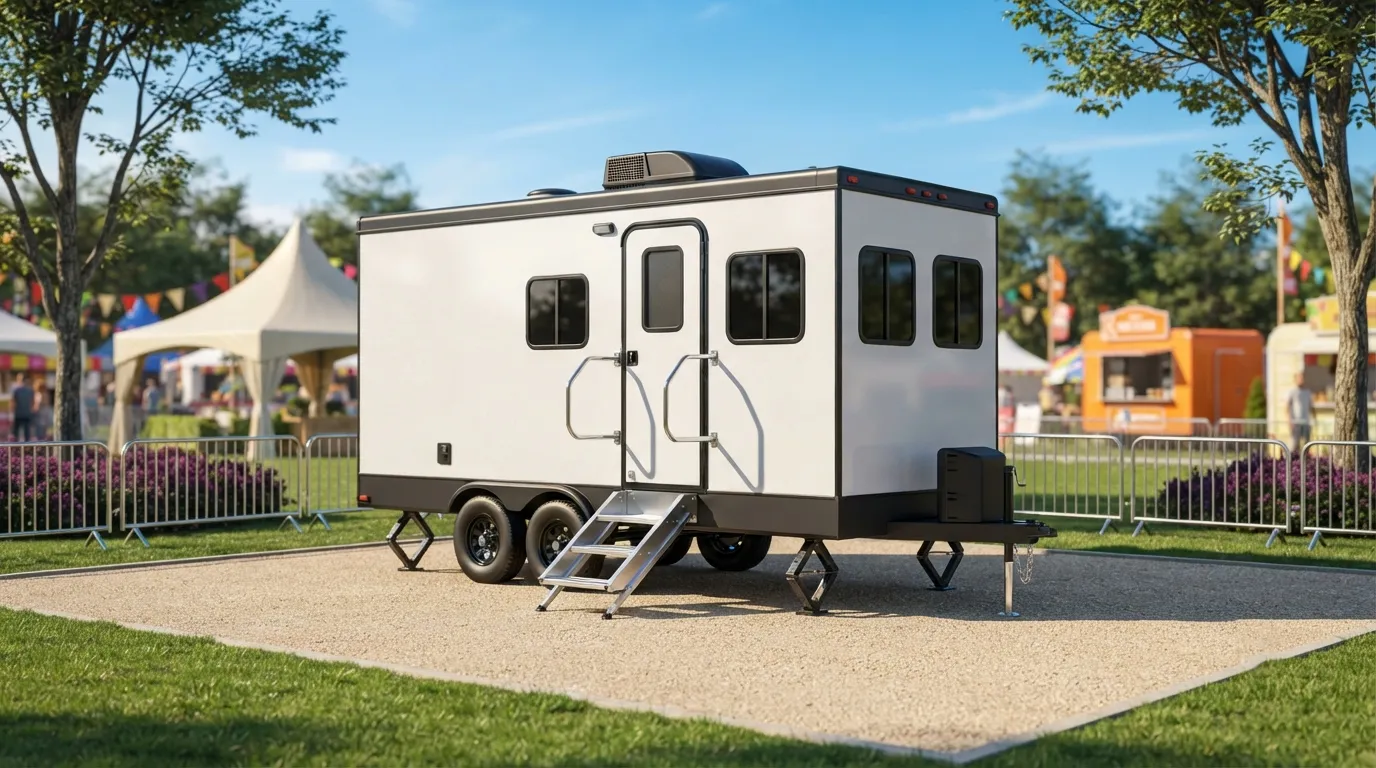
It comes down to space and reach, not just a bigger box. ADA Standards section 304.3.1 calls for a 60 inch diameter turning circle inside the unit, enough room for a wheelchair to rotate fully. The door opening has to clear at least 32 inches under section 404.2.3, and the path leading to it needs a minimum 36 inch clear width per section 403.5.1. Grab bars, a raised toilet seat and interior latch height all matter, but they only work if the footprint underneath them is right. San Bernardino Porta Pros stocks units built to these dimensions specifically, see the ADA accessible porta potty page for the unit itself. Ground surface counts too: section 302.1 requires the surface under and around the unit be stable, firm and slip resistant, which matters on the gravel and dirt lots common to job sites around San Bernardino. Skip that step and the unit fails inspection even if the toilet itself is compliant. Pair the ADA unit with a handwashing station rental placed on the same firm pad, since a station stuck in loose dirt defeats the same standard.
How many ADA units does a San Bernardino job site need?
One accessible unit per site is the floor, not the target. Section 213.2 sets that 5 percent ratio against your total toilet count, so a site running 20 standard units under standard porta potty rental needs at least one ADA unit, and a 40-unit festival needs two. This stacks on top of the general OSHA 1926.51(c) ratio, which calls for 1 toilet per 20 construction workers up to 20 people, then 1 toilet and 1 urinal per 40 workers beyond that. Run both numbers separately, then make sure the accessible share of your total meets 213.2. Our how many porta potties do I need guide walks the math for mixed crews. For events, apply the same ratio against expected attendance rather than a headcount, and check our event restroom rental page for how that changes on race days or festival grounds. A wedding at a private venue in San Bernardino with 150 guests, for instance, still needs at least one accessible unit even if the rest of the order is standard stock.
Where should an ADA unit be placed on site?
Placement fails almost as often as unit choice does. The approach route needs that same 36 inch clear width the whole way, per section 403.5.1, with no steps, ruts or loose gravel breaking the path. If a ramp is unavoidable to reach a raised pad, section 405.2 caps the running slope at 1:12, which means a long, gradual run rather than a short, steep one. Reach ranges matter inside the unit too: section 308.2.1 sets a 48 inch maximum and 15 inch minimum for a forward unobstructed reach, so interior fixtures like paper dispensers can't be mounted too high or too low. Door hardware falls under section 309.4, operable with one hand, no tight grasping or twisting, and no more than 5 pounds of force to open. Our porta potty placement guide covers firm-pad staging in more detail, and delivery crews serving San Bernardino sites plan around roughly 60 feet of straight clearance behind the truck for any accompanying roll-off dumpster rental delivered to the same lot. Keep the ADA unit closest to the main path of travel, not tucked behind the row.
Do ADA porta potty rules apply to construction sites too?
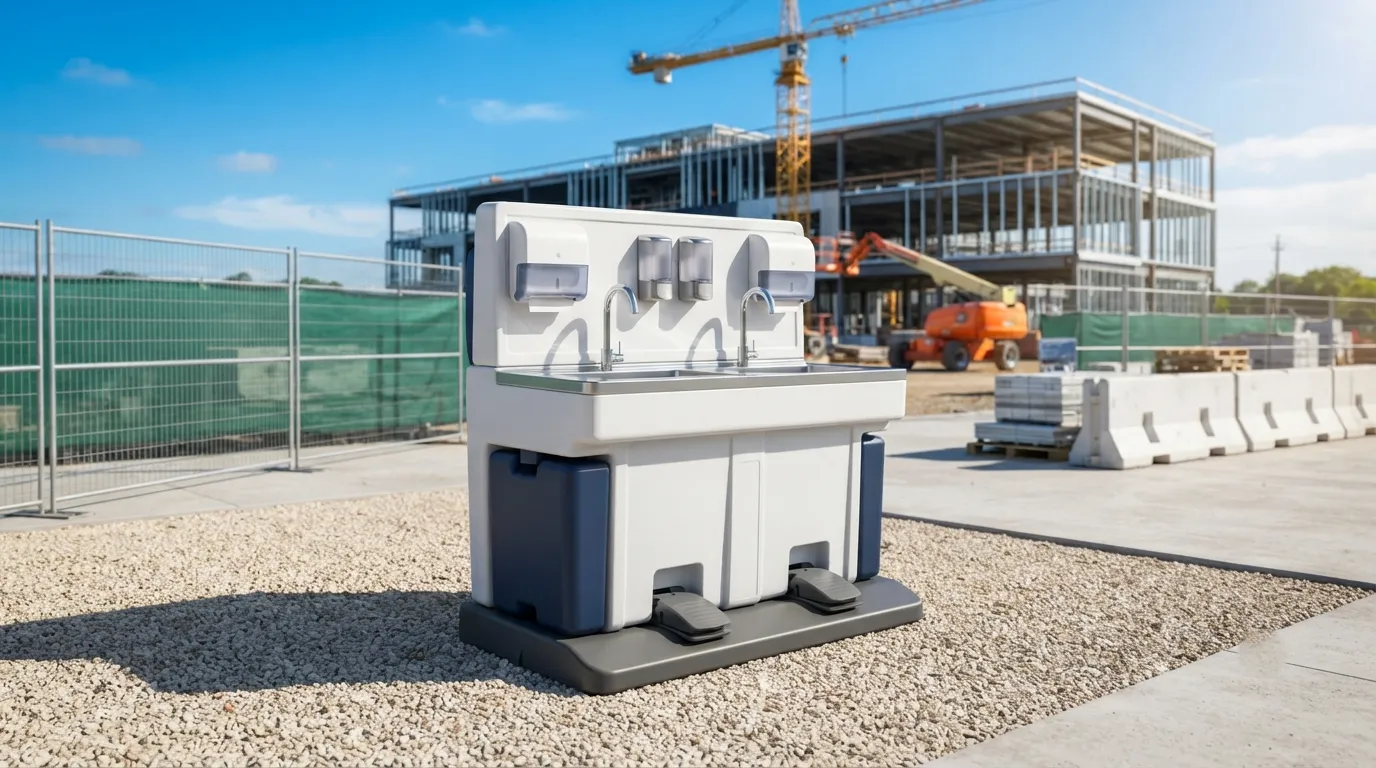
Yes, and they run alongside general sanitation rules, not instead of them. OSHA 1926.51(c) sets the base toilet ratio for construction crews, while ADA Standards section 213.2 governs the accessible share of whatever units you bring in. A superintendent running a multi-week job through construction site services needs both numbers checked before delivery, not after a walkthrough flags it. Field crews doing paint, coatings or pesticide work also trigger OSHA 1926.51(f)(1), which requires washing facilities separate from general handwashing. Pair that with a portable sink rental or dedicated hand sanitizer station rental rather than assuming the toilet unit covers it. For agricultural operations near San Bernardino, OSHA 1928.110 sets its own standard: one facility per 20 hand-labor employees, reachable within a quarter mile walk, which is stricter on distance than most job sites plan for. Our farm and agricultural restrooms page breaks that down further, and our OSHA portable toilet requirements guide compares it against standard construction ratios.
| unit | duration | typical price |
|---|---|---|
| ada | day | 230 |
| ada | week | 185 |
Weekend ADA rental in San Bernardino runs close to the weekly rate, so a two-day event often costs about the same as booking the full week. Check porta potty rental cost for how ADA pricing compares to standard units across durations.
Do I need an ADA unit for a small backyard event?
Small private events with no public access generally fall outside the 213.2 clustering rule, since it applies where units are grouped for public or worksite use. If any guest uses a wheelchair or has limited mobility, book one anyway. It costs less than a last-minute swap and keeps the wedding restroom rental order simple.
Can a standard unit be modified to meet ADA specs?
No. The footprint, turning radius and door width are built into the accessible unit itself, not added later. A standard unit runs about 44 by 48 inches on the ground, well under the accessible turning circle required by section 304.3.1.
What happens if a site fails an ADA restroom inspection?
Expect a stop-work order or a fine, depending on the inspecting authority. Most failures trace back to placement, not the unit, so review the porta potty rental checklist before delivery day rather than after the inspector shows up.
Does San Bernardino require ADA units for street-facing events?
Right-of-way placement rules for San Bernardino events are not fully confirmed here, so check with the city directly before locking a layout. Our porta potty permit requirements page covers what to ask.
How far in advance should I book an ADA unit?
Book as soon as headcount is set. ADA units run in smaller supply than standard stock, and weekend demand across San Bernardino and towns like Colton, 8.9 miles south, tightens availability fast during event season.
Next step
Get a delivery date
Tell us the address, the dates and the headcount. We size the order and confirm the route.